

How to Measure Your Dog for a Collar
A well-fitting collar should be secure enough that it won’t slip over your dog’s ears, but loose enough to remain comfortable during walks and naps. Follow these steps to find the perfect fit.
1. The Measurement Process
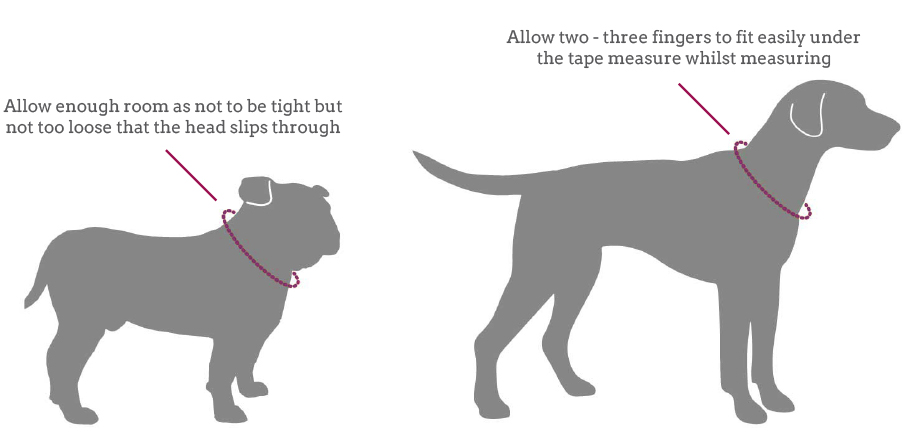
- Use a Flexible Tape: Wrap a soft tailor’s tape measure around the base of the neck where the collar usually sits.
- The “Two-Finger” Rule: Once the tape is around the neck, slide two fingers between the tape and your dog. The tape should be snug against your fingers. This ensures the collar won’t be too tight or pinch.
- No Tape Measure? Use a piece of string to get the circumference, then lay the string flat against a ruler.
2. Sizing by Type
- Standard Buckle Collars: Use the exact measurement you just took. Most collars list a range (e.g., 14″–18″). Aim for a size where your dog’s measurement falls in the middle of that range.
- Martingale (No-Slip) Collars: For these, you also need to measure the widest part of the head (usually across the ears). Since Martingales slip over the head, the collar must be able to clear this point.
3. Safety Check
- For Puppies: Remember that puppies grow fast! Check the fit of their collar weekly. You should always be able to fit those two fingers underneath.
- For Deep-Chested or Slim-Headed Breeds: If your dog’s neck is larger than their head (like a Greyhound or Whippet), consider a Martingale collar to prevent them from backing out of it.
Pro-Tip
It’s helpful to remember that the collar length is not the same as the neck size. A collar that is 20 inches long usually fits a neck size slightly smaller because of the overlap at the buckle.
The Ultimate Guide to Measuring Your Dog for a Harness
Finding the perfect harness starts with an accurate measurement. A well-fitted harness prevents chafing, ensures your dog can’t slip out, and allows for a full range of natural movement.
🛠️
What You’ll Need
- Soft Fabric Tape Measure: Do not use a metal tape measure, as these are rigid and can provide inaccurate results.
- Pen and Paper: To record your findings immediately.
- Treats: To keep your dog standing squarely and relaxed.
📏
3 Essential Measurements
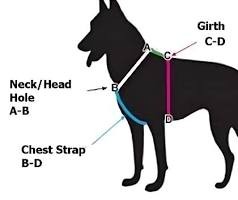
- Chest Girth (Most Important):Measure around the widest part of your dog’s ribcage. This is typically 2–3 inches (or 4 fingers) behind the front legs. Ensure the tape is snug but not tight.
- Neck Circumference:Measure around the base of the neck, right where a collar would naturally sit. For some “over-the-head” styles, you may also need to measure the widest part of the head.
- Body Length (Optional):Measure from the base of the neck along the spine to the base of the tail. This is especially helpful for long-backed breeds like Dachshunds.
🚶
Step-by-Step Instructions
- Get Them Standing: Have your dog stand naturally on all four paws. Never measure while they are sitting or lying down, as their chest expands differently.
- Wrap the Tape: Level the tape measure around the widest part of the chest. Ensure it isn’t twisted.
- The “Two-Finger” Rule: You should be able to slide two fingers comfortably between the tape and your dog’s body.
- Repeat for Accuracy: Measure at least twice to ensure consistency.
💡
Pro Tips for a Perfect Fit
- Between Sizes? Always size up. It is easier to tighten an adjustable harness than to force a small one to fit.
- Check Weight: Use your dog’s weight as a secondary check to confirm you are in the right size category.
Mind the Fluff: If your dog has a very thick coat, compress the fur slightly with the tape to reach the actual body.
How to Measure Your Dog for a Coat: A Step-by-Step Guide
Getting the right fit is essential for your dog’s comfort and mobility. Follow these three simple steps to find their perfect size.
1. Preparation
- Tools: Use a soft, flexible tailor’s tape measure. If you don’t have one, use a piece of string and measure it against a ruler.
- Position: Ensure your dog is standing squarely on all four legs on a flat surface. Measuring while they are sitting or lying down will result in inaccurate numbers.
2. The Three Key Measurements
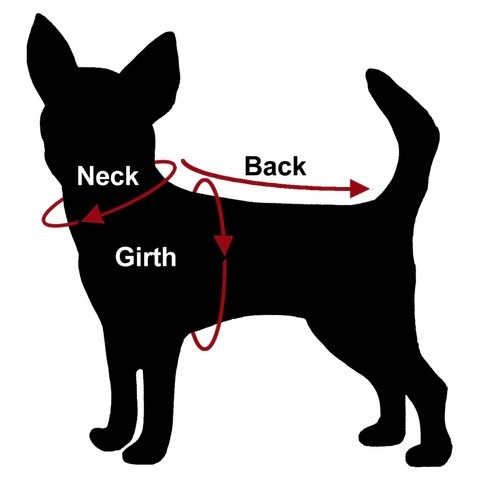
- Back Length (Topline): This is often the most important measurement for coat sizing. Measure from the base of the neck (where the collar naturally sits) along the spine to the base of the tail.
- Chest Girth: Measure around the widest part of your dog’s rib cage, typically just behind the front legs. Ensure the tape is snug but not tight.
- Neck Circumference: Measure around the base of the neck. A good rule of thumb is to leave enough space to comfortably slide two fingers between the tape and your dog’s neck.
3. Quick Fitting Tips
- The “Two-Finger” Rule: For both the neck and chest, always leave enough room for two fingers to ensure the coat isn’t restrictive.
- Between Sizes? If your dog’s measurements fall between two sizes on a chart, it is almost always best to size upfor extra comfort.
- Check the Brand: Sizing isn’t universal—a “Medium” in one brand might be a “Large” in another. Always compare your dog’s specific measurements to the manufacturer’s size chart.
Frequently Asked Questions (FAQs)
Q: My dog is exactly between two sizes. Which should I choose?
A: Always size up. It is much easier to adjust a slightly larger coat, harness, or collar than it is to make a small one comfortable. Extra room is especially important for coats if your dog has a thick winter or “double” coat.
Q: How do I know if a harness fits correctly?
A: Use the “Two-Finger” rule. You should be able to fit two fingers snugly between the harness straps and your dog’s body. Pay close attention to the armpits—the harness should sit far enough back that it doesn’t rub or “chafe” when they walk.
Q: Should I measure my dog while they are sitting?
A: No. Always measure while your dog is standing squarely on all four paws. When a dog sits, their neck and chest “scrunch” and expand, and their spine curves. Measuring a sitting dog will result in a coat or harness that is too tight when they actually start moving.
Q: What is the most important measurement for a harness?
A: The Chest Girth (the widest part of the ribcage) is the most critical measurement for a harness. This ensures the weight is distributed safely across the chest rather than the neck.
Q: My dog wears a harness—do I need a special coat?
A: Check if the coat has a harness portal (a small slit on the back). If it doesn’t, you will need to wear the harness over the coat, in which case you should definitely size up the harness to accommodate the extra bulk.
Q: How often should I check the fit of my dog's gear?
A: For adult dogs, a quick check every few months is great. For puppies, check their collar and harness every week. They grow in “spurts,” and a fit that was perfect Monday could be dangerously tight by Sunday!
Q: Can I just measure my dog’s old collar or harness?
A: It’s always best to measure the dog directly. If you must measure an old collar, measure from the buckle to the hole currently in use. For harnesses, old straps may have stretched over time, so a fresh measurement is always safer.